


How to Optimize Dog Joint Health Naturally Step-by-Step
Watching your beloved companion slow down or struggle with simple movements can be both worrying and heart-breaking for dog owners everywhere. When stiff joints and discomfort impact your pet’s joy and vitality, understanding the true root of their joint health becomes even more urgent. This guide explores a holistic, breed-specific approach to joint support, inspired by primal nutrition and grounded in the latest veterinary and genetic research, helping you make informed decisions for your senior or health-challenged dog.
Table of Contents
- Step 1: Assess Your Dog’s Joint Health And Specific Needs
- Step 2: Select The Right Primal Joint Supplements For Optimal Support
- Step 3: Incorporate Organ-Based Nutrition And Holistic Feeding Routines
- Step 4: Monitor Improvement And Adjust Supplement Strategies
- Step 5: Verify Long-Term Joint Health Using Vet-Approved Methods
Quick Summary
| Key Point | Explanation |
|---|---|
| 1. Regular Joint Health Assessments | Conduct comprehensive evaluations annually, especially for older or predisposed breeds, to monitor joint health effectively. |
| 2. Choose Appropriate Joint Supplements | Select supplements with key ingredients like Glucosamine, Omega-3, and MSM that support joint function and promote health. |
| 3. Implement Holistic Feeding Practices | Introduce organ-based nutrition and balanced meals to mimic natural diets and enhance overall well-being and joint health. |
| 4. Monitor Progress Diligently | Keep a detailed log of mobility, energy levels, and any pain responses to adjust dietary and supplement strategies accordingly. |
| 5. Professional Veterinary Follow-ups | Schedule regular veterinary check-ups and diagnostic imaging for accurate assessments to guide long-term joint health strategies. |
Step 1: Assess your dog’s joint health and specific needs
Understanding your dog’s joint health begins with a comprehensive evaluation that considers multiple factors affecting their mobility and comfort. Assessing joint health requires careful observation, professional consultation, and a systematic approach to identifying potential issues before they become severe.
To effectively evaluate your dog’s joint health, start by performing a thorough physical examination that includes several key assessments:
- Mobility Check: Observe your dog’s movement patterns during daily activities
- Range of Motion: Gently test how easily your dog can flex and extend their joints
- Pain Response: Watch for signs of discomfort when touching or moving specific areas
- Weight and Body Condition: Excess weight significantly impacts joint stress
Professional veterinarians recommend detailed screenings, especially for breeds predisposed to joint issues. The dog genome research provides critical insights into genetic predispositions that can help predict potential joint problems.
Additionally, consider factors like age, breed, activity level, and previous injuries. Dogs over 7 years old, large breed dogs, and those with athletic backgrounds often require more rigorous joint health monitoring. Professional veterinary documentation helps track these specific health needs and potential risk factors.
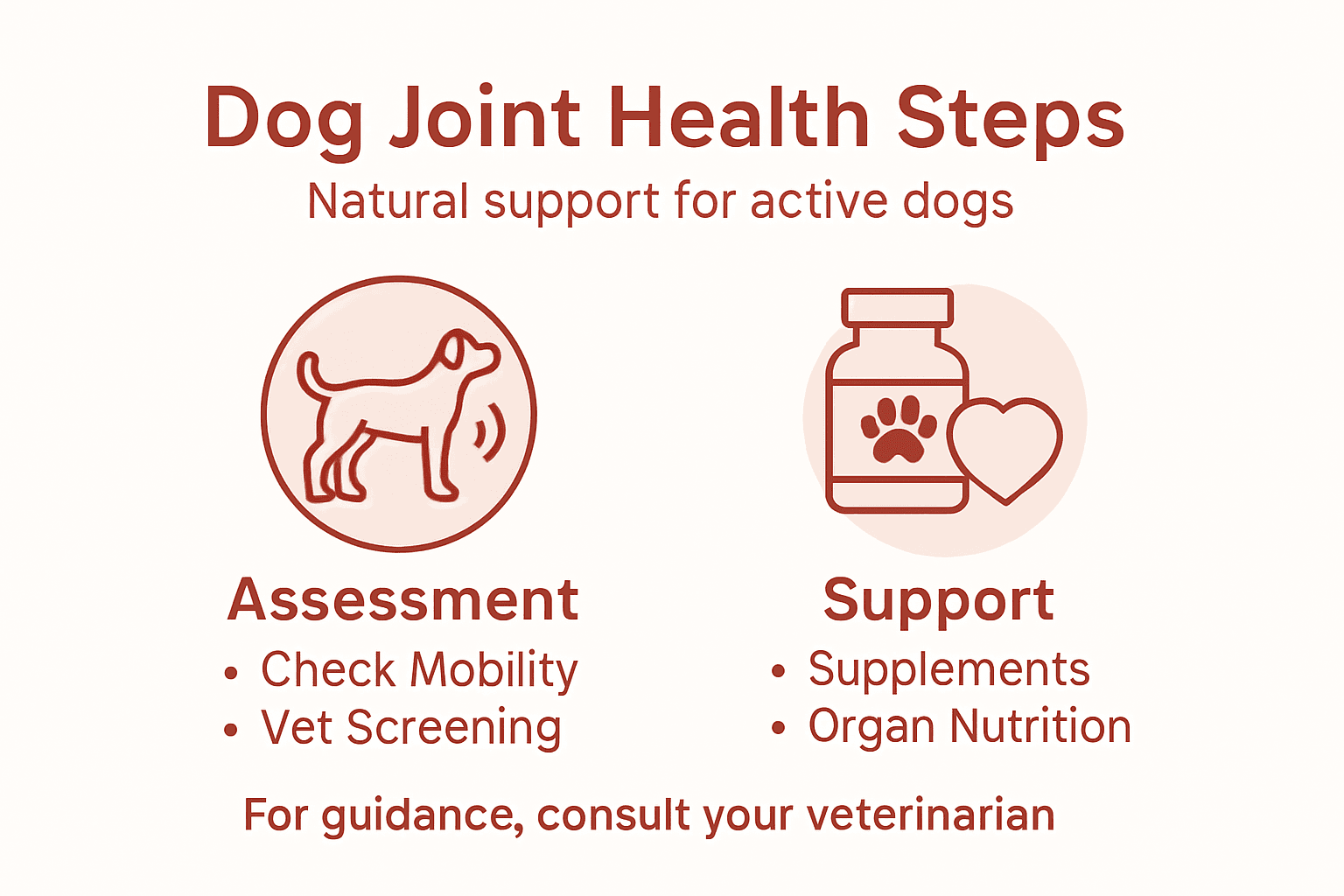
Here’s a summary of key factors influencing your dog’s joint health assessment:
| Assessment Factor | Impact on Joint Health | Professional Recommendation |
|---|---|---|
| Age | Older dogs have higher risk | Annual vet screenings advised |
| Breed | Large breeds predisposed | Genetic risk analysis suggested |
| Activity Level | Athletes face joint strain | Monitor exercise routines closely |
| Weight | Excess increases joint stress | Maintain optimal body condition |
| Injury History | Past injuries raise risk | Document and monitor changes |
Early detection and proactive management are key to maintaining your dog’s joint health and overall mobility.
Pro tip: Create a detailed mobility journal tracking your dog’s movement, energy levels, and any observed discomfort to share with your veterinarian during check-ups.
Step 2: Select the right primal joint supplements for optimal support
Choosing the right joint supplements requires a strategic approach that considers your dog’s unique health profile, genetic predispositions, and specific nutritional needs. The goal is to select supplements that mimic the primal nutrition of wolf ancestors, supporting natural joint function and mobility.
When evaluating joint supplements, focus on key ingredients that provide comprehensive support:
- Glucosamine and Chondroitin: Essential building blocks for cartilage repair
- Collagen Peptides: Support joint structure and connective tissue health
- Omega-3 Fatty Acids: Reduce inflammation and support joint lubrication
- MSM (Methylsulfonylmethane): Helps reduce joint pain and improve flexibility
The NIH supplement fact sheets provide critical guidance on selecting safe and effective natural joint support ingredients. Professional veterinarians recommend supplements that combine multiple targeted nutrients to address joint health comprehensively.

Consider your dog’s specific needs based on age, breed, and activity level. Senior dogs and large breeds typically require more intensive joint support, while younger dogs might benefit from preventative supplementation. Look for supplements that offer bioavailable nutrition and are specifically formulated to support natural joint function.
The table below compares joint supplement ingredients and their main functions:
| Ingredient | Main Benefit | Common Source |
|---|---|---|
| Glucosamine & Chondroitin | Cartilage repair and protection | Shellfish, animal cartilage |
| Collagen Peptides | Enhances joint structure | Beef, chicken collagen |
| Omega-3 Fatty Acids | Reduces inflammation | Fish oil, flaxseed oil |
| MSM | Improves flexibility and comfort | Plant-based supplements |
Primal joint supplements should work with your dog’s natural healing mechanisms, not replace them.
Pro tip: Consult with your veterinarian before starting any new supplement regimen to ensure the product is tailored to your dog’s specific health requirements.
Step 3: Incorporate organ-based nutrition and holistic feeding routines
Reviving your dog’s primal nutritional blueprint means moving beyond traditional kibble and embracing a holistic approach that mirrors the nutrient-rich diet of wolf ancestors. Organ-based nutrition offers a powerful strategy for supporting joint health by providing concentrated, bioavailable nutrients that support cellular repair and systemic wellness.
To implement a holistic feeding routine, focus on these key nutritional strategies:
- Raw Organ Meats: Incorporate liver, heart, and kidney as primary nutrient sources
- Bone Broth: Support joint health with collagen-rich, mineral-dense liquid
- Omega-Rich Proteins: Include wild-caught fish and grass-fed meat sources
- Targeted Organ Supplements: Add concentrated organ blends that mimic ancestral diets
The FDA guidelines on balanced nutrition emphasize the importance of comprehensive nutritional profiles that support overall health. Holistic feeding isn’t about radical changes, but strategic nutrition that supports your dog’s natural healing mechanisms.
Pay special attention to your dog’s individual needs. Senior dogs might require more intensive nutritional support, while younger dogs benefit from preventative nutritional strategies. Rotating protein sources and maintaining nutrient diversity helps ensure a comprehensive approach to joint and overall health.
Holistic nutrition is about returning to the primal nutritional wisdom of your dog’s wolf ancestors.
Pro tip: Gradually introduce new foods and monitor your dog’s response, keeping a detailed journal to track improvements in mobility and overall vitality.
Step 4: Monitor improvement and adjust supplement strategies
Tracking your dog’s joint health journey requires a systematic and attentive approach that goes beyond simple observation. Documenting your dog’s progress allows you to make informed decisions about their nutritional and supplement strategies, ensuring you’re supporting their primal health needs effectively.
Implement a comprehensive monitoring strategy with these key tracking methods:
- Mobility Scoring: Track range of motion and comfort levels weekly
- Activity Journal: Record daily energy, play duration, and movement patterns
- Weight Management: Monitor body condition and muscle mass
- Veterinary Check-ins: Schedule quarterly professional assessments
Dietary supplement research emphasizes the importance of personalized monitoring to optimize supplement effectiveness. Each dog responds uniquely to nutritional interventions, making careful observation crucial for tailoring their joint health approach.
Pay close attention to subtle changes in your dog’s behavior and physical capabilities. Senior dogs might show more gradual improvements, while younger dogs could experience rapid positive responses. Adjust supplement dosages and rotate nutritional strategies based on your observations and veterinary guidance.
Your dog’s body provides continuous feedback - learn to listen and interpret its signals.
Pro tip: Create a digital or physical health journal with dated entries, photos, and veterinary notes to track your dog’s joint health transformation comprehensively.
Step 5: Verify long-term joint health using vet-approved methods
Transitioning from active management to long-term joint health verification requires a strategic and scientific approach that goes beyond simple observation. Professional veterinary assessment provides the most reliable method for understanding your dog’s ongoing joint wellness and potential areas needing intervention.
Ensure comprehensive long-term joint health verification through these critical steps:
- Annual Professional Screenings: Schedule comprehensive joint health examinations
- Advanced Diagnostic Imaging: Use X-rays and ultrasound to track joint changes
- Blood Work Panels: Monitor inflammatory markers and nutritional indicators
- Mobility Baseline Testing: Establish and track range of motion metrics
The FDA’s approved veterinary protocols offer standardized methods for evaluating canine joint health with scientific precision. These evidence-based approaches help veterinarians develop personalized long-term management strategies.
Understand that joint health is a dynamic process. Genetic predispositions, lifestyle factors, and nutritional interventions all play crucial roles in your dog’s joint wellness trajectory. Regular professional assessments allow for timely adjustments to your holistic joint health strategy.
Long-term joint health is a journey of continuous care, not a destination.
Pro tip: Request a digital copy of each veterinary assessment to create a comprehensive health timeline that tracks your dog’s joint health progression.
Support Your Dog’s Joint Health the Natural Way
Joint pain and reduced mobility can deeply affect your dog’s happiness and energy levels. This article lays out clear steps to optimize dog joint health through natural, primal nutrition and supplements designed to restore comfort and flexibility. If you are looking to address issues such as cartilage repair, inflammation, and overall joint support without relying on synthetic solutions, you are in the right place.
At Wolfroots, we specialize in high-quality, natural pet supplements inspired by the ancestral diets of wolves. Our products focus on organ-based nutrition, collagen-rich joint support, and bioavailable ingredients like bone marrow and organ organics including liver, heart, and kidney. These powerful supplements help replicate the primal nutrition your dog needs for stronger joints and lasting vitality. Plus, all our formulas are vet approved to ensure safe and effective care.
Discover how to naturally enhance your dog’s joint health with our premium supplements and holistic feeding solutions. Act now to give your dog the comfort and mobility they deserve by visiting Wolfroots today. Take the proactive step toward improved vitality and a happier, more active companion.
Explore our products to start your dog’s journey with natural joint support: Wolfroots supplements.
Frequently Asked Questions
How can I assess my dog’s joint health effectively?
Start by observing your dog’s mobility during daily activities and looking for any signs of discomfort. Additionally, consult your veterinarian for a thorough physical examination to identify specific joint issues. Regular assessments can help catch problems early, ideally before they become severe.
What should I consider when choosing joint supplements for my dog?
Focus on key ingredients such as Glucosamine, Chondroitin, and Omega-3 Fatty Acids that support joint health. Consult with your veterinarian to select a supplement that fits your dog’s specific age, breed, and activity level, and monitor their response over the first few weeks.
How can I incorporate organ-based nutrition into my dog’s diet?
Introduce raw organ meats like liver, heart, and kidney, as well as bone broth into your dog’s meals for added nutrients that support joint health. Start slowly with small portions, increasing over time to ensure your dog adapts well to these new foods.
What steps can I take to monitor my dog’s joint health progress?
Implement a mobility scoring system and maintain a daily activity journal to track changes in your dog’s movement and comfort levels. Review this information regularly and adjust their diet or supplements accordingly, and consult your veterinarian as needed for ongoing evaluations.
How often should my dog see a veterinarian for joint health assessments?
Schedule annual professional screenings to evaluate your dog’s joint health comprehensively. These visits are crucial for assessing any changes and ensuring your dog’s long-term joint health is on track, allowing for timely interventions if needed.
What are the signs that my dog’s joint health is improving?
Look for increased activity levels, improved range of motion, and a reduction in discomfort during movement. Track these changes consistently over a few weeks, aiming for noticeable improvements within 30–60 days after implementing new nutrition or supplement strategies.