


How to Support Dog Joints Naturally for Lasting Relief
Finding the right way to help your senior dog move comfortably can feel like a daily challenge. Joint stiffness, reluctance to climb stairs, or skipping favorite walks are signs many American pet owners notice as dogs age. Understanding your dog’s joint health and choosing vet-approved, natural supplements backed by research gives you a path toward real relief. This article outlines practical, holistic steps using primal nutrition and proven strategies to restore your dog’s mobility and improve their quality of life.
Table of Contents
- Step 1: Assess Your Dog’s Joint Health And Lifestyle
- Step 2: Incorporate Primal Joint-Supportive Supplements
- Step 3: Enhance Diet With Organ-Based Nutrition
- Step 4: Monitor Joint Mobility And Adjust Routine
Quick Summary
| Important Insight | Explanation |
|---|---|
| 1. Assess joint health and movement | Monitor your dog’s movement for signs of joint issues like limping, stiffness, and reduced activity over one to two weeks. |
| 2. Use targeted joint-supporting supplements | Introduce quality supplements with ingredients like glucosamine and omega-3s to reduce inflammation and support cartilage health. |
| 3. Incorporate organ-based nutrition | Gradually add organ meats to your dog’s diet for concentrated nutrients that enhance joint repair and overall health. |
| 4. Regularly monitor mobility and progress | Keep track of your dog’s mobility weekly to adjust support strategies based on noticeable improvements or setbacks. |
| 5. Consult your veterinarian for guidance | Always involve your vet in supplement choices and adjustments to ensure safety and effectiveness in your dog’s joint care. |
Step 1: Assess your dog’s joint health and lifestyle
Before you can support your dog’s joints, you need to understand their current condition. This step helps you identify whether your dog is experiencing early joint stress, arthritis, or other mobility challenges that require attention.
Start by observing your dog’s movement patterns over the next week or two. Watch for these common signs that suggest joint problems:
- Reluctance to stand or get up from resting positions, especially after sleep or long rest periods
- Difficulty climbing stairs or jumping onto furniture they once navigated easily
- Limping or favoring certain legs, particularly noticeable after exercise or activity
- Reduced activity level or reluctance to engage in play and walks they once enjoyed
- Muscle wasting in the rear limbs or overall muscle loss over time
- Stiffness when first getting up in the morning that improves with movement
Pay attention to when these symptoms appear. Are they worse in cold, damp weather? Do they improve after a warm-up period? This context matters when you speak with your veterinarian.
Next, assess your dog’s weight and body condition. Excess weight places additional stress on joints, accelerating wear and tear. Feel your dog’s ribs gently—you should be able to feel them without pressing hard. If you can’t feel them easily, weight management will be crucial for joint health.
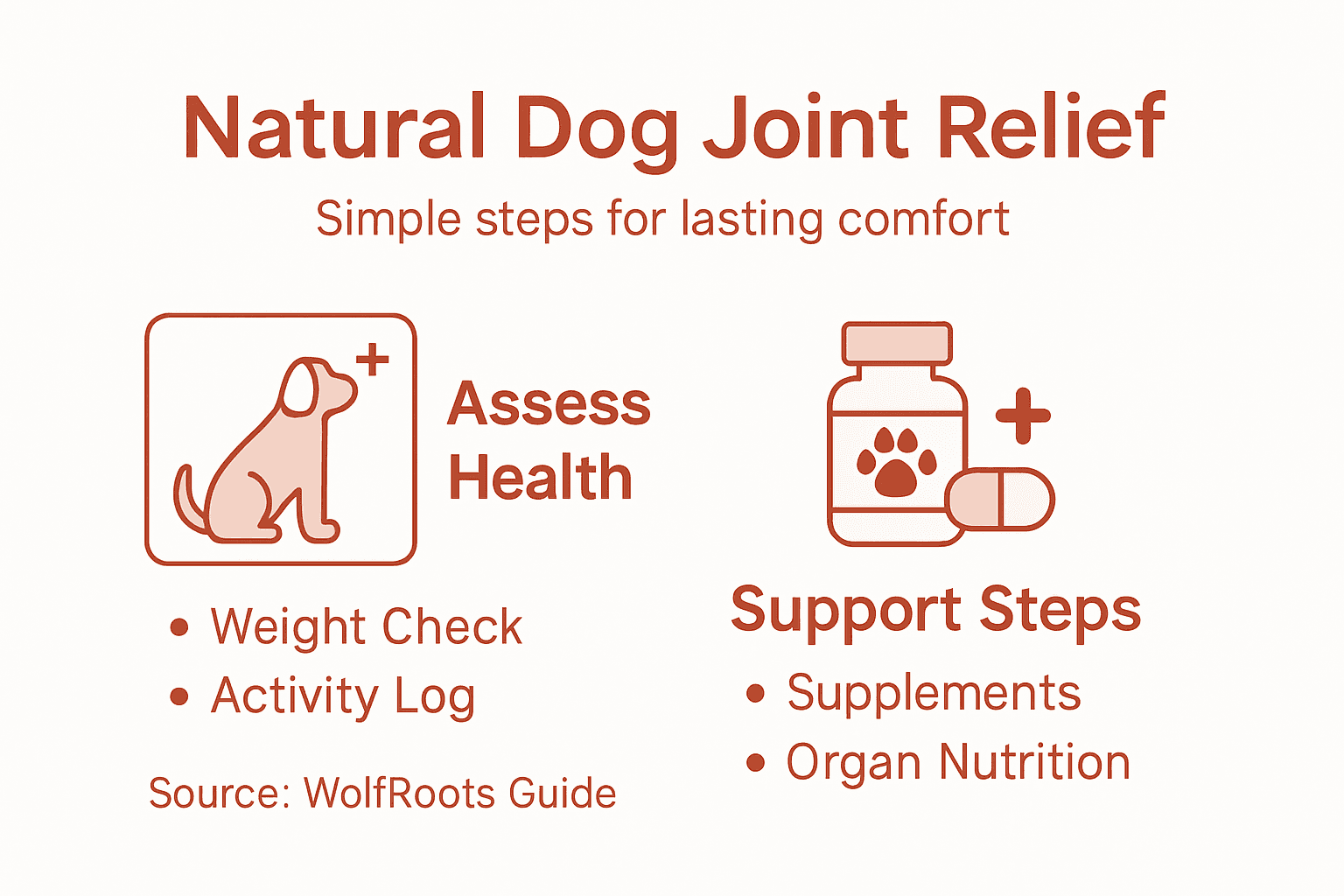
Consider your dog’s lifestyle and activity level. How much exercise does your dog get daily? Is it consistent or sporadic? Dogs benefit from regular, appropriate exercise that maintains mobility without overstraining joints. High-impact activities on hard surfaces affect joints differently than swimming or walking on grass.
Document any breed predispositions. Larger breeds and certain genetics make some dogs more prone to hip dysplasia and joint issues. If your dog has breed-related risk factors, early intervention becomes even more valuable.
Once you’ve gathered this information, schedule a veterinary examination. Your vet can perform a physical assessment and take radiographs if needed to assess joint damage or structural issues. They’ll establish a baseline and help you understand the severity of any existing conditions. This professional assessment guides everything that follows, ensuring your natural support approach complements professional medical care.
Observation and professional assessment work together—your notes about daily symptoms combined with veterinary findings create the complete picture needed to support your dog’s joints effectively.
Pro tip: Keep a simple notebook for one to two weeks, jotting down morning stiffness observations, activity levels, and behavioral changes; this written record becomes invaluable when discussing your findings with your veterinarian.
Step 2: Incorporate primal joint-supportive supplements
Now that you understand your dog’s joint condition, it’s time to introduce targeted natural support. The right supplements work alongside diet and exercise to reduce inflammation, support cartilage health, and restore mobility.
Start by identifying the core joint-support ingredients that research backs. A comprehensive review of clinical studies shows that glucosamine and chondroitin support cartilage repair, while omega-3 fatty acids reduce inflammation and turmeric provides antioxidant protection. MSM also offers anti-inflammatory benefits. These work together, not alone, which is why multi-ingredient formulas often outperform single-ingredient supplements.
Understand supplement quality before purchasing. The supplement industry lacks strict regulatory oversight, meaning quality varies dramatically between brands. This is where third-party testing becomes crucial. Look for products tested by independent labs that verify ingredient content and purity. This ensures you’re giving your dog what the label promises, not fillers or contaminants.
Consider your dog’s specific needs when selecting supplements. Does your dog need maximum anti-inflammatory support for active arthritis pain? Focus on omega-3 and turmeric formulas. Is early joint maintenance your goal for a senior dog? A balanced formula with glucosamine, chondroitin, and collagen works well. Some dogs benefit from bone broth or organ-based supplements that provide bioavailable nutrition aligned with ancestral canine diets.
The best joint supplements align with primal nutrition principles, offering whole-food ingredients that your dog’s body recognizes and utilizes efficiently. Organ-based formulas deliver natural enzymes and cofactors that support cellular repair from within.
Here’s a quick comparison of popular joint-supportive supplement ingredients and their primary benefits:
| Ingredient | Main Benefit | Ideal For |
|---|---|---|
| Glucosamine | Repairs cartilage | Senior dogs, early maintenance |
| Chondroitin | Protects joint structure | Dogs with arthritis risk |
| Omega-3s | Reduces inflammation | Dogs with active joint pain |
| Turmeric | Offers antioxidant support | Dogs needing inflammation relief |
| MSM | Eases pain and soreness | Active, high-impact breeds |
Always consult your veterinarian before introducing new supplements. Your vet can recommend appropriate dosages tailored to your dog’s size, age, and specific joint condition. They’ll also ensure supplements don’t interact with any medications your dog takes. This professional guidance is non-negotiable for safe, effective support.
Third-party tested supplements deliver real results because you’re actually getting the ingredients your dog needs for lasting joint restoration.
Pro tip: Start with one new supplement at a time, waiting two weeks before adding another, so you can clearly observe which ingredients your dog responds to best and avoid overwhelming their system.
Step 3: Enhance diet with organ-based nutrition
Your dog’s joints need dense nutritional support to repair and maintain cartilage. Organ-based nutrition delivers concentrated vitamins and minerals that commercial kibble simply cannot match, making it a game-changer for joint health.
Understand what organ meats provide. Liver, kidney, heart, and other organs contain bioavailable nutrients that support cellular repair and reduce inflammation. These foods align with your dog’s ancestral diet, delivering the primal nutrition wolves and wild dogs consumed naturally. Organ meats provide concentrated vitamins and minerals beneficial for joint health and can complement your dog’s regular food perfectly.

Start incorporating organ-based nutrition gradually into your dog’s existing diet. Don’t replace their entire diet overnight. Instead, add small amounts of organ-based supplements or fresh organ meats two to three times weekly initially, then increase frequency as your dog’s digestive system adapts.
Consider these organ sources for maximum joint support:
- Liver offers selenium, copper, and B vitamins that support collagen synthesis
- Bone marrow provides natural collagen, calcium, and compounds that nourish joint tissue
- Heart delivers CoQ10 and taurine, supporting cellular energy and inflammation reduction
- Kidney supplies concentrated minerals and enzymes that aid nutrient absorption
Proper preparation matters for both safety and nutrition. Sourcing fresh organs and using cooking methods that preserve nutritional value while eliminating pathogens ensures your dog gets maximum benefit. If preparing fresh organs feels overwhelming, high-quality organ-based supplements offer the same nutritional profile with convenience.
Balance organ nutrition with appropriate hydration and overall diet composition. Your dog needs adequate proteins, healthy fats, and carbohydrates working together. Organ-based nutrition amplifies the effectiveness of your joint-support strategy by providing the raw materials your dog’s body needs to rebuild damaged tissue.
The table below summarizes the nutritional value of common organ meats for dogs:
| Organ Source | Key Nutrients Provided | Joint Health Role |
|---|---|---|
| Liver | Selenium, copper, B vitamins | Collagen synthesis |
| Bone marrow | Collagen, calcium | Joint tissue repair |
| Heart | CoQ10, taurine | Cellular energy support |
| Kidney | Minerals, enzymes | Nutrient absorption |
Organ-based nutrition isn’t a supplement or an extra—it’s a return to ancestral feeding that unlocks your dog’s natural healing potential.
Pro tip: Start with liver or bone marrow blends since most dogs find them palatable, then gradually introduce other organs as your dog becomes accustomed to the stronger flavors and your confidence in preparation grows.
Step 4: Monitor joint mobility and adjust routine
Supporting your dog’s joints is an ongoing process, not a one-time fix. Regular monitoring reveals what’s working and what needs adjustment, ensuring your dog maintains the best possible mobility and quality of life.
Start tracking your dog’s mobility patterns weekly. Observe the same activities at consistent times—morning walks, stair climbing, playtime—so you’re comparing apples to apples. Note improvements like increased enthusiasm, smoother movements, or earlier morning mobility. Also track setbacks such as new limping, reluctance to exercise, or increased stiffness.
Regular assessment of joint pain and mobility helps you catch changes early. Document specific observations that guide your decisions:
- Morning stiffness duration and severity
- Gait changes during walks or play
- Activity enthusiasm and willingness to jump or climb stairs
- Resting patterns and how often your dog shifts positions
- Post-exercise recovery time needed to feel normal again
Be prepared to adjust your routine based on observations. If your dog shows improvement after four weeks on supplements, congratulations—continue the current protocol. If mobility hasn’t changed or has worsened, consult your veterinarian about dosage adjustments, different supplement combinations, or additional interventions.
Exercise modifications matter as much as supplements. Your dog’s activity level should match current joint condition. Some days call for shorter walks or swimming instead of running. Adjusting activity levels and tailoring exercise plans based on mobility changes keeps your dog engaged without aggravating joints.
Schedule follow-up veterinary appointments every six to eight weeks initially. Your vet can reassess joint function, compare notes on your observations, and recommend adjustments to your entire support strategy. Professional guidance combined with your daily observations creates the most effective approach.
Your dog’s response to natural support reveals itself through consistent observation—the data you collect becomes your most valuable tool for optimization.
Pro tip: Create a simple spreadsheet or phone notes app logging weekly observations with dates, noting energy levels, mobility scores on a scale of one to ten, and any diet or supplement changes so you can identify patterns over months.
Naturally Support Your Dog’s Joints with WolfRoots
Joint discomfort and reduced mobility can deeply affect your dog’s daily happiness and energy. If you have noticed stiffness, reluctance to jump or play, or signs of early arthritis in your dog, embracing a primal nutrition strategy is crucial. This article highlights the importance of using targeted, high-quality supplements and organ-based nutrition to reduce inflammation, support cartilage repair, and enhance joint function for lasting relief.
At WolfRoots, we specialize in providing natural joint support formulas and organ-based nutrition products inspired by ancestral wolf diets. Our offerings include collagen-rich bone marrow chews, multi-vitamin blends, and fresh organ organics such as liver and heart to fuel your dog’s joint repair from within. Every product undergoes rigorous vet approval and third-party testing so you can confidently improve your dog’s vitality and mobility.
Discover our full range of supplements and organ nutrition at the Shop – WolfRoots. Bring lasting joint relief to your canine companion today by visiting WolfRoots.
Take the first step toward enhancing your dog’s joint health naturally. Explore our premium supplements and organ-based nutrition now and see the difference a primal, holistic approach can make in your dog’s life.
Frequently Asked Questions
How can I assess my dog’s joint health?
To assess your dog’s joint health, observe their movement for signs like reluctance to stand, difficulty climbing stairs, or increased stiffness. Track these behaviors for one to two weeks to gather valuable information for your veterinarian appointment.
What natural supplements can support my dog’s joints?
Natural supplements that support dog joints include glucosamine, chondroitin, omega-3 fatty acids, and turmeric. Start by introducing one supplement at a time, monitoring your dog’s response for at least two weeks before adding more.
How should I incorporate organ-based nutrition for joint support?
Incorporate organ-based nutrition by gradually adding small amounts of organ meats like liver or bone marrow into your dog’s diet. Aim for two to three times a week initially, increasing frequency as your dog adapts to these nutrient-rich foods.
How often should I monitor my dog’s mobility improvements?
Regularly monitor your dog’s mobility on a weekly basis, observing activities such as walks and play to note changes. Adjust your support routine as necessary based on these observations, aiming for consistent improvement within a month.
When should I consult my veterinarian about my dog’s joint health?
Consult your veterinarian if you notice any worsening symptoms or little improvement in your dog’s mobility within four weeks of starting a natural support regimen. Schedule follow-up appointments every six to eight weeks to reassess their joint health and adjust your approach as needed.