


What Is Joint Support for Dogs: Key Benefits
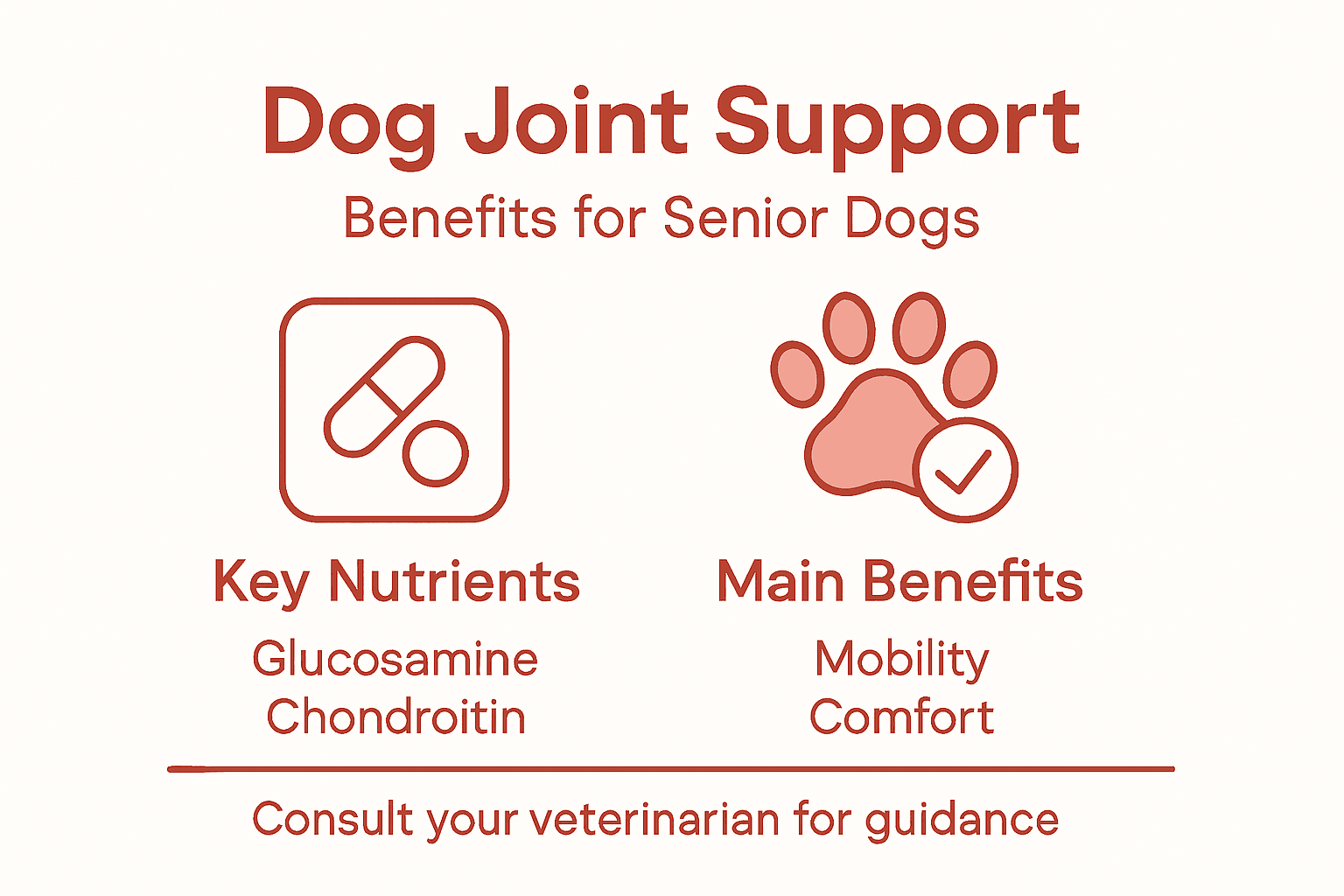
Watching your senior dog’s steps slow with age can spark concern, especially when their once playful energy fades. Joint discomfort and reduced mobility are common hurdles for older dogs in the United States, but you are not powerless. Joint support supplements—like glucosamine, chondroitin, and omega-3 fatty acids—offer a gentle, vet-guided way to maintain comfort and support cartilage repair. Learn how to choose natural supplements that nourish joint health so your companion stays active and bright.
Table of Contents
- Joint Support For Dogs: Core Definition
- Types Of Joint Support Supplements And Chews
- How Joint Support Ingredients Work
- Common Misconceptions And Safety Risks
- Comparing Natural And Conventional Alternatives
Key Takeaways
| Point | Details |
|---|---|
| Comprehensive Joint Support is Crucial | Maintaining senior dog mobility requires a combination of supplements, lifestyle changes, and veterinary care to slow joint deterioration. |
| Early Intervention Matters | Starting joint support before signs of discomfort is more effective than treating advanced joint issues. |
| Quality and Safety of Supplements Vary | Choose trusted, high-quality joint supplements, as many lack regulatory oversight and may vary significantly in effectiveness. |
| Combined Approach Works Best | Integrating natural supplements with conventional medications provides a comprehensive strategy for managing joint health in senior dogs. |
Joint support for dogs: core definition
Joint support for dogs refers to a comprehensive approach to maintaining and protecting your senior dog’s mobility and comfort as they age. It combines supplements, lifestyle adjustments, and veterinary care to address common joint issues before they severely limit your dog’s quality of life.
At its core, joint support targets the wear and tear that happens naturally over time. Your dog’s joints—particularly in the hips, elbows, knees, and spine—face constant stress from movement, body weight, and the aging process. Joint support works to slow this deterioration and manage pain when it appears.
What Joint Support Actually Does
Joint support operates through several mechanisms that work together:
- Rebuilds cartilage structure by providing nutrients your dog’s body needs to repair worn-down joint surfaces
- Reduces inflammation in affected joints, decreasing pain and stiffness
- Increases synovial fluid production to maintain lubrication and cushioning within the joint
- Supports flexibility and range of motion so your senior dog can move without discomfort
Joint support isn’t a cure—it’s a maintenance strategy that slows joint deterioration and keeps your dog active longer.
The Difference Between Supplements and Medications
Joint supplements differ significantly from prescription anti-inflammatory drugs. Joint supplements are nutraceuticals derived from food sources, available in forms like chews or powders, and are designed to work gradually over time. They address the underlying joint health rather than just masking pain temporarily.
Regulations don’t require supplements to prove efficacy the way medications must, so quality varies dramatically between brands. This makes choosing a trusted source—one that tests for quality and safety—essential for your senior dog’s health.
Why Senior Dogs Benefit Most
Your senior dog’s joints have accumulated years of impact. Managing osteoarthritis through joint support helps reduce progression and alleviate symptoms, often working alongside other treatments your veterinarian recommends.
Senior dogs typically need support around age seven or eight, though this varies by breed and size. Larger breeds experience joint stress earlier than smaller breeds.
Beyond Supplements: A Complete Strategy
True joint support extends beyond supplements alone. Your dog needs:
- Consistent, low-impact exercise (swimming and walking are ideal)
- Maintaining a healthy weight to reduce joint stress
- Adequate rest on supportive bedding
- Veterinary monitoring to catch issues early
Pro tip: Start joint support before your senior dog shows obvious lameness or stiffness—prevention works far better than treating advanced joint disease after damage occurs.
Types of joint support supplements and chews
Your senior dog has access to more joint support options than ever before. Understanding what each type does helps you choose the right formula for your dog’s specific needs and preferences.
Joint supplements come in multiple delivery forms, each designed to make administration easier and more appealing to your dog. The most common options include powders you mix with food, capsules for precise dosing, and chews that most dogs actually enjoy eating.
Here’s how joint supplement formats compare for senior dogs:
| Format | Best For | Administration Ease | Main Limitation |
|---|---|---|---|
| Chews | Most senior dogs | Very easy | May not suit all tastes |
| Powders | Picky or dental dogs | Easy, mix with food | Flavor may be rejected |
| Capsules | Precise dosing needed | Harder, needs hiding | Some dogs resist pills |
The Key Active Ingredients
Most effective joint supplements share core ingredients that target cartilage health and inflammation:
- Glucosamine stimulates cartilage repair and rebuilds worn joint surfaces over time
- Chondroitin helps cartilage retain water, maintaining cushioning and flexibility in joints
- MSM (methylsulfonylmethane) reduces inflammation and supports connective tissue repair
- Omega-3 fatty acids decrease inflammatory responses throughout the body and joints
Quality varies dramatically between products because regulatory oversight is limited—choose supplements tested for potency and safety.
Chews: The Preferred Format for Senior Dogs
Chews are the most popular joint support delivery method for good reason. Glucosamine, chondroitin, and omega-3 fatty acids in chew form offer ease of administration and palatability that senior dogs appreciate.

Your dog simply chews and swallows—no mixing with food or wrestling with capsules. This matters when your senior dog is already dealing with stiffness and discomfort. Chews also allow you to verify your dog actually consumed the supplement, unlike powders that might be left in the food bowl.
Powders: Flexibility for Picky Eaters
Powdered supplements work well for dogs resistant to chews or those with dental sensitivity. You mix them directly into wet food, broth, or treats. Powders offer flexibility in dosing and work well for multi-ingredient formulas.
The downside? Some dogs detect the taste and refuse the meal entirely. This requires trial and error with your particular senior dog.
Prescription Versus Over-the-Counter Options
Your veterinarian might recommend common glucosamine and chondroitin supplements alongside anti-inflammatory compounds to manage orthopedic conditions. Some vets offer prescription-grade supplements with higher concentrations and stricter quality control than over-the-counter options.
OTC supplements cost less but vary in quality. Prescription options provide more consistency, though they require veterinary approval and cost more upfront.
Combination Formulas Versus Single-Ingredient Supplements
Combination formulas address multiple aspects of joint health simultaneously. Single-ingredient options let you customize your approach but require managing multiple products.
For senior dogs, combination formulas typically work better because they target cartilage repair, inflammation reduction, and mobility simultaneously with one daily dose.
Pro tip: Start with chew-based formulas that include glucosamine, chondroitin, and omega-3 fatty acids together—this combination targets all major aspects of joint health in a format most senior dogs accept willingly.
How joint support ingredients work
Joint support ingredients don’t work by magic—they work by addressing the specific biological processes that break down your senior dog’s joints. Understanding how each ingredient targets cartilage, inflammation, and mobility helps you appreciate why combination formulas work better than single ingredients alone.
Your dog’s joints are constantly under stress. Movement, body weight, and aging cause cartilage to wear down and joints to become inflamed. Effective joint support ingredients interrupt these processes and provide the raw materials your dog’s body needs to repair itself.
Glucosamine: Rebuilding Cartilage Foundation
Glucosamine acts as a building block for cartilage repair. Your dog’s body uses glucosamine to synthesize new cartilage tissue and replace damaged structures. When cartilage wears away, glucosamine helps slow that deterioration and encourages regrowth.
This process takes time—typically 4 to 8 weeks before you notice improvement in your senior dog’s mobility. Glucosamine works best when given consistently over months, not days.
Chondroitin: Maintaining Joint Cushioning
Chondroitin keeps cartilage hydrated and maintains its shock-absorbing properties. Cartilage acts like a sponge, absorbing water to provide cushioning between bones. When chondroitin levels drop, cartilage loses water and becomes rigid and painful.
Chondroitin also blocks enzymes that naturally break down cartilage, essentially pumping the brakes on joint deterioration. Your senior dog’s joints stay more flexible and cushioned when chondroitin levels are adequate.
Omega-3 Fatty Acids: Fighting Inflammation
Omega-3 fatty acids work differently than glucosamine and chondroitin. Omega-3s reduce joint inflammation and support overall joint health by decreasing inflammatory responses throughout your dog’s body.
Inflammation causes pain and stiffness in arthritic joints. Omega-3s calm that inflammatory cascade, allowing your senior dog to move more comfortably and maintaining mobility longer.
MSM: Antioxidant and Anti-Inflammatory Power
MSM (methylsulfonylmethane) provides antioxidant and anti-inflammatory effects that complement other ingredients. MSM strengthens connective tissue and supports the production of collagen and keratin needed for healthy joints.
MSM also reduces pain signaling in the nervous system, helping your senior dog feel more comfortable during movement.
How They Work Together
The most effective joint support uses multiple ingredients simultaneously:
- Glucosamine and chondroitin rebuild cartilage structure
- Omega-3s reduce inflammation and pain
- MSM provides additional antioxidant protection
- Together, they slow degeneration while promoting repair
Single-ingredient supplements address only one aspect of joint health. Your senior dog needs multifaceted support to truly slow the progression of arthritis and maintain mobility.
Combination formulas work faster and more effectively than individual ingredients because they address cartilage repair, inflammation reduction, and pain management simultaneously.
Pro tip: Give joint support supplements consistently for at least 6 to 8 weeks before evaluating effectiveness—your senior dog’s body needs time to repair cartilage and reduce inflammation at the cellular level.
Common misconceptions and safety risks
Not all joint supplements are created equal, and the supplement industry isn’t as tightly regulated as you might think. Health-conscious dog owners often assume natural products are automatically safe and effective—a misconception that can compromise your senior dog’s wellbeing.
Understanding the real risks helps you make informed decisions and protect your dog from products that simply don’t work or worse, could cause harm.
Misconception: Natural Equals Safe and Effective
This is the most dangerous assumption dog owners make. Just because joint supplements come from natural sources doesn’t mean they’re proven safe or that they actually work. Many products lack regulatory oversight and have unproven ingredient content, creating significant gaps between marketing claims and actual effectiveness.
Some supplements contain contaminants or incorrect ingredient amounts. Your senior dog deserves verification that what’s on the label actually matches what’s in the bottle.
Misconception: Supplements Can Replace Veterinary Treatment
Joint supplements support joint health—they don’t replace veterinary pain management. Some dog owners delay proper treatment, thinking supplements alone will solve the problem. This approach often allows joint disease to worsen while your senior dog suffers unnecessarily.
Supplements work best as part of a comprehensive strategy that includes veterinary supervision, appropriate medications when needed, exercise, and weight management.
Safety Risk: Drug Interactions and Health Conditions
Your senior dog metabolizes supplements like medications, raising serious concerns for dogs with liver or kidney disease. Supplements can interact with prescribed medications or worsen underlying conditions you may not realize exist.
A dog with kidney issues, for example, might suffer complications from certain supplement ingredients. Without veterinary oversight, you won’t know.
Safety Risk: Improper Dosing and Unknown Adverse Effects
Too much of any supplement can cause problems. Improper dosing damages your senior dog’s liver or kidneys over time. Some dogs experience gastrointestinal upset, allergic reactions, or other adverse effects that owners never connect to the supplement.
How to Verify Quality and Safety
Protect your senior dog by following these verification steps:
- Consult your veterinarian before starting any supplement
- Choose products tested by third-party laboratories for potency and contaminants
- Verify the manufacturer’s quality control standards
- Start with the lowest recommended dose and monitor for adverse effects
- Report any changes in your dog’s behavior, appetite, or energy to your vet
Evidence-based pain management approaches—combining supplements with veterinary guidance and multimodal therapy—work far better than relying solely on unproven supplements.
Red Flags for Low-Quality Supplements
Be skeptical of products that:
- Make extreme claims (“cures arthritis” or “eliminates pain completely”)
- Lack third-party testing information
- Won’t clearly list all ingredients and their amounts
- Cost suspiciously less than competitors
- Have no customer reviews or lack transparency
Pro tip: Always ask your veterinarian which specific supplements they recommend for your senior dog, then verify those products undergo third-party testing before purchasing—this single step dramatically reduces safety risks.
Comparing natural and conventional alternatives
Your senior dog’s joint health isn’t an either-or choice between natural supplements and conventional medications. The most effective approach combines both, tailored to your dog’s specific condition, age, and overall health status.
Understanding how natural and conventional options differ helps you work with your veterinarian to create the best strategy for your senior dog’s unique needs.
Natural Joint Support: How It Works
Natural joint support focuses on providing building blocks and reducing inflammation gradually. Products like glucosamine, chondroitin, and omega-3 fatty acids work slowly to support cartilage maintenance and ease joint stress over weeks or months.
Natural supplements excel at symptom support and long-term cartilage health. They’re gentler on the stomach and rarely cause adverse effects in healthy dogs. However, they provide less aggressive pain relief than conventional medications.
Conventional Options: Faster Pain Relief
NSAIDs (nonsteroidal anti-inflammatory drugs) like carprofen and meloxicam deliver faster, more dramatic pain relief than any supplement. Conventional treatments including NSAIDs and corticosteroids aim to reduce pain and improve joint function more aggressively than natural alternatives alone.
Conventional medications have strong evidence for efficacy in controlling pain and inflammation. The trade-off is potential side effects—gastrointestinal upset, kidney or liver concerns with long-term use—requiring veterinary monitoring.
Key Differences at a Glance
Key differences between natural and conventional joint support options:
| Approach | Onset Speed | Main Benefit | Monitoring Needed |
|---|---|---|---|
| Natural Supplements | Slow (weeks) | Long-term joint repair | Minimal, unless ill |
| NSAIDs/Medications | Fast (days) | Immediate pain relief | Regular labs for safety |
| Rehab Therapy | Gradual | Muscle/mobility gains | Guided by a specialist |
| Surgery | Immediate | Fixes structural issues | Surgical aftercare |
- Natural supplements: Gentle, gradual improvement, fewer side effects, variable effectiveness, less regulated
- Conventional medications: Fast relief, proven efficacy, known side effects, require veterinary prescription and monitoring
- Physical rehabilitation: Strengthens muscles, improves mobility, works best combined with other approaches
- Surgery: Addresses severe structural damage when conservative treatments fail
The Integration Approach Works Best
Natural products often work alongside conventional treatments for osteoarthritis management, creating a comprehensive pain management strategy. Your veterinarian might recommend starting with NSAIDs for immediate pain relief while adding natural supplements for long-term cartilage support.
As your senior dog improves, some dogs eventually need lower NSAID doses because the combined approach addresses pain from multiple angles simultaneously.
Questions to Ask Your Veterinarian
Work with your vet to determine the right combination for your senior dog:
- Which approach addresses my dog’s specific condition most effectively?
- Should we start with supplements alone or combine them with medications?
- What monitoring is needed if my dog takes NSAIDs long-term?
- How often should we reassess the treatment plan?
- Are there any interactions between supplements and prescribed medications?
The best joint support strategy combines natural and conventional approaches based on your senior dog’s individual health status, not on ideology or preference.
Real-World Results
Many senior dogs benefit from starting with natural supplements plus appropriate veterinary medications, then gradually adjusting as improvement occurs. Your dog might eventually maintain mobility with lower medication doses once cartilage repair occurs and inflammation decreases.
Pro tip: Start any new joint support regimen—natural or conventional—under veterinary guidance, monitoring your senior dog closely for the first two weeks to establish baseline response before making adjustments.
Unlock Natural Joint Support to Keep Your Senior Dog Active and Comfortable
Aging dogs often suffer from stiff joints and decreased mobility, but you do not have to accept this as inevitable. The challenges outlined in “What Is Joint Support for Dogs: Key Benefits” highlight the importance of combining effective nutrients like glucosamine, chondroitin, and omega-3 fatty acids with holistic, organ-based nutrition to support cartilage repair and reduce inflammation. If you want to help your dog move pain free and maintain vitality the natural, primal approach offered by Wolfroots is a powerful solution.
Discover high quality, vet approved supplements inspired by ancestral wolf diets that include bone marrow and collagen-based chews designed specifically for joint health. At Wolfroots, each product is crafted to enhance not only joint comfort but also immunity and overall well-being. Act now to provide your senior dog with the comprehensive joint support they deserve. Explore our unique selection and give your dog the gift of mobility today.
Frequently Asked Questions
What are the main benefits of joint support for dogs?
Joint support for dogs helps maintain mobility and comfort as they age by reducing inflammation, rebuilding cartilage, and increasing lubrication in the joints. It ultimately improves your dog’s quality of life while slowing down joint deterioration.
How do joint supplements differ from medications for dogs?
Joint supplements are nutraceuticals that work gradually to support joint health by addressing the underlying issues, while medications like NSAIDs provide immediate pain relief. Supplements usually come from natural sources and are not regulated the same way medications are, leading to significant quality variations among products.
At what age should I start my dog on joint support?
Senior dogs typically benefit from joint support starting around the age of seven or eight, although this can vary based on the dog’s breed and size. Larger breeds may need joint support earlier due to increased joint stress.
What should I look for when choosing a joint supplement for my dog?
When selecting a joint supplement for your dog, look for quality products that include key active ingredients like glucosamine, chondroitin, omega-3 fatty acids, and MSM. Additionally, verify that the product has undergone third-party testing for potency and safety.