


Why Natural Dog Vitamins Benefit Your Pet’s Health
Finding the right support for an aging or health-challenged dog can feel confusing, especially when synthetic multivitamins crowd the shelves. Many American pet owners want solutions rooted in nature and guided by holistic philosophies. Natural dog vitamins harness the power of whole foods like meats, vegetables, and fruits to deliver nutrients as your dog’s body recognizes them, supporting growth and immune health without harsh additives or unnecessary chemicals.
Table of Contents
- What Makes Dog Vitamins Natural
- Types Of Natural Supplements For Dogs
- Primal And Organ-Based Nutrition Insights
- Key Health Benefits And Scientific Support
- Risks Of Synthetic Alternatives And What To Avoid
Key Takeaways
| Point | Details |
|---|---|
| Natural Versus Synthetic | Natural dog vitamins are sourced from whole foods, enhancing absorption and bioavailability, while synthetic vitamins may introduce contaminants and lower effectiveness. |
| Ingredient Sourcing Matters | Opt for reputable brands that use recognized whole-food ingredients and minimal processing to ensure nutrient potency and safety. |
| Species-Specific Formulation | Dogs require tailored vitamin formulations; avoid human multivitamins as they may cause health imbalances in pets. |
| Long-Term Health Benefits | Natural vitamins support overall health, improving immunity, joint function, and coat quality through scientifically-backed ingredients. |
What Makes Dog Vitamins Natural
Natural dog vitamins come from real food sources, not laboratory test tubes. These are organic compounds derived from whole ingredients like fresh meats, vegetables, and fruits that undergo minimal processing. Your dog’s body recognizes and utilizes these nutrients differently than synthetic alternatives.
The core distinction lies in the source. Natural dog vitamins originate from plant and animal-based ingredients rather than being chemically synthesized in factories. This means your dog gets vitamins the way nature intended—embedded within food matrices that enhance absorption and bioavailability.
How Natural Differs from Synthetic
Synthetic vitamins are isolated compounds created through chemical processes. Natural vitamins exist as part of complex food mixtures that include cofactors, enzymes, and other compounds that work synergistically. Your dog’s digestive system evolved to break down whole foods, making natural forms easier to process.
Here’s a summary highlighting the differences between natural and synthetic dog vitamins:
| Aspect | Natural Vitamins | Synthetic Vitamins |
|---|---|---|
| Source | Whole foods like meat and vegetables | Chemically produced in factories |
| Nutrient Complexity | Multi-compound, includes cofactors | Isolated single nutrients |
| Absorption | Better bioavailability from food matrices | Lower, missing supporting compounds |
| Contamination Risk | Minimal if properly sourced | Higher, may include heavy metals |
| Processing | Minimal, gentle methods preserve nutrients | Often involves heat and chemicals |
| Long-term Impact | Supports natural health and function | May cause health issues or toxicity |
Consider this difference:
- Natural sources: Liver contains vitamin A alongside iron, copper, and B vitamins all working together
- Synthetic sources: Isolated retinol acetate manufactured separately without supporting nutrients
- Your dog’s response: Whole-food vitamin complexes trigger better nutrient absorption and utilization
Natural vitamins support vital biological functions like growth and immune response because they arrive in the same form your dog’s ancestors consumed for thousands of years.
Sourcing Standards Matter
Not all “natural” vitamins are created equal. Reputable natural dog supplements source ingredients from quality whole foods rather than by-products or fillers. The processing method determines whether vitamins retain their potency.
Minimal processing preserves nutrient density. Cold-drying, gentle extraction, and whole-food concentration maintain the vitamin structure and surrounding compounds that enhance effectiveness. Heavy processing, heat treatment, or chemical extraction can degrade these delicate compounds.
When reviewing labels, look for recognizable ingredient names. If you can’t pronounce it or don’t know what it is, it likely isn’t a whole-food source. Real ingredients like beef liver, chicken, sweet potato, and leafy greens signal authentic natural formulations.
Why Dosage Differs from Human Vitamins
Dogs require different vitamin amounts than humans do. A dog’s metabolism, body composition, and nutritional needs create a unique profile requiring species-appropriate formulation. Generic human supplements can actually harm your dog.
Natural dog vitamins account for these differences, delivering nutrients in canine-specific ratios. This precision ensures your aging or health-compromised dog receives therapeutic benefits without excess that could cause imbalances.
Pro tip: Look for supplements listing whole-food ingredients you recognize on the label, and verify that the formulation specifically targets canine nutrition rather than using human multivitamin ratios adapted for dogs.
Types Of Natural Supplements For Dogs
Natural supplements come in many forms, each addressing specific health needs for your aging or health-compromised dog. The right combination can restore vitality and support your dog’s body from the inside out. Understanding what’s available helps you make informed choices aligned with primal nutrition principles.
Joint and Mobility Support
Glucosamine stands out as one of the most researched natural supplements for dogs. It works by maintaining cartilage health and reducing joint deterioration, making it essential for senior dogs or those with mobility concerns. This natural compound derives from shellfish sources or plant-based alternatives.

Chondroitin often pairs with glucosamine to amplify joint protection. Together, they create a synergistic effect that supports cushioning between bones and reduces inflammation naturally.
Omega-3 and Coat Health
Fish oil delivers omega-3 fatty acids that transform your dog’s health from skin to heart. These essential fats reduce inflammation, promote a glossy coat, and support cognitive function in aging dogs. Quality fish oil comes from wild-caught sources rather than farmed fish.
Flaxseed oil offers a plant-based alternative for dogs with fish sensitivities. Both options provide anti-inflammatory benefits that work systemically throughout your dog’s body.
Digestive and Immune Fortification
Popular natural supplements include probiotics that restore gut microbiome balance. A healthy digestive system strengthens immune response and nutrient absorption. Look for multi-strain probiotics with species-specific formulations for canines.
Antioxidants like vitamins C and E combat free radicals that accelerate aging. These work alongside herbal extracts to protect cellular health and support your dog’s natural defense mechanisms.
Use this reference table to quickly see which types of natural supplements address specific health concerns:
| Supplement Type | Primary Benefit | Typical Source |
|---|---|---|
| Joint Support | Cartilage health and mobility | Glucosamine from shellfish |
| Omega-3 Oils | Skin, coat, heart, and brain health | Fish oil, flaxseed oil |
| Probiotics | Gut health and immune function | Multi-strain blends for dogs |
| Organ Supplements | Comprehensive nutrition, detoxification | Beef liver, heart, kidney |
| Herbal Enhancers | Anti-inflammatory, organ support | Turmeric, milk thistle, ginger |
Organ-Based and Whole-Food Supplements
Primal nutrition goes deeper than isolated nutrients. Organ supplements deliver concentrated nutrition from beef liver, heart, kidney, and spleen—the foods your dog’s wolf ancestors naturally prioritized. These whole-food sources provide vitamins, minerals, and cofactors in their complete forms.
Key organ supplement benefits:
- Liver: Rich in vitamin A, iron, B vitamins, and CoQ10
- Heart: Contains taurine and other cardiac-supporting compounds
- Kidney: Provides minerals crucial for filtration and balance
- Pancreas: Supports digestive enzyme production naturally
Natural supplements work best when sourced from whole foods rather than isolated ingredients, honoring your dog’s ancestral dietary blueprint.
Herbal and Plant-Based Additions
Herbal supplements like turmeric, milk thistle, and ginger address specific concerns. Turmeric’s curcumin reduces inflammation naturally, while milk thistle supports liver function. These traditional remedies align with holistic healing approaches that recognize the body’s innate capacity for restoration.
Green-lipped mussel and bone marrow add mineral density and joint support without synthetic additives. They represent the bridge between ancestral nutrition and modern supplement science.
Pro tip: Start with one new supplement at a time, waiting 2-3 weeks before adding another, so you can identify which products create visible improvements in your dog’s energy, coat quality, and mobility.
Primal And Organ-Based Nutrition Insights
Your dog’s wolf ancestors thrived on whole prey—organs, muscle, bone, and all. This ancestral blueprint shaped your dog’s digestive system and nutritional requirements in ways modern kibble often misses. Primal nutrition reconnects your dog to this evolutionary heritage.
Organ-based supplements honor this biological truth. They deliver concentrated nutrients in forms your dog’s body recognizes and utilizes efficiently. Unlike isolated vitamins manufactured in laboratories, organ meats contain complete nutrient profiles with cofactors that enhance absorption.
Why Organs Matter More Than Muscle
Muscle meat provides protein, but organs provide power. Beef liver contains vitamin A, iron, copper, and B vitamins at levels that dwarf muscle tissue. Heart delivers taurine crucial for cardiac function. Kidney and pancreas supply minerals and enzymes your dog’s body needs for optimal function.
Wolf ancestors prioritized organs first. They understood—instinctively—that organs held the life force. Modern primal nutrition science confirms this ancestral wisdom through nutrient density analysis.
The Complete Nutrient Profile
Individualized nutrition plans incorporating organ meats address protein, fatty acids, vitamins, and minerals in balanced ratios. This holistic approach supports health across all life stages and clinical objectives.
Organ supplements provide:
- Bioavailable nutrients: Already in forms your dog’s body absorbs efficiently
- Enzymatic cofactors: Supporting digestion and cellular function naturally
- Mineral density: Including calcium, phosphorus, and trace minerals in proper ratios
- Amino acid profiles: Complete protein structures for tissue repair and maintenance
Primal nutrition recognizes that organs contain not just nutrients, but the biological intelligence your dog’s ancestors relied upon for thousands of years.
Supporting Ancestral Health Restoration
When your aging dog receives organ-based nutrition, you’re triggering cellular memory. The body recognizes these foods as legitimate fuel sources, not foreign substances. This allows your dog’s innate healing capacity to activate naturally.
This differs fundamentally from synthetic supplementation. Your dog’s system processes whole-food organs through the same pathways its ancestors used for millennia. The result: genuine restoration rather than temporary symptom management.
Practical Implementation for Your Dog
Start with single-organ supplements—liver first—to observe your dog’s response. Many owners report visible improvements in energy, coat quality, and mobility within 3-4 weeks. Then layer additional organs based on your dog’s specific health needs.
Senior dogs particularly benefit from heart and kidney support. Health-compromised dogs benefit from liver’s detoxification and regenerative properties.
Pro tip: Rotate between different organ sources (beef, lamb, bison) every 6-8 weeks to ensure comprehensive nutrient exposure and prevent dietary monotony that can reduce digestive efficiency.
Key Health Benefits And Scientific Support
Natural dog vitamins deliver measurable improvements across multiple health dimensions. Your aging dog doesn’t just feel better—scientific evidence shows actual physiological changes occurring at the cellular level. These aren’t promises; they’re documented outcomes.
The benefits extend beyond single systems. When your dog receives comprehensive natural vitamin support, you’re addressing immunity, joint function, cognitive clarity, and coat vitality simultaneously. This holistic transformation is what separates primal nutrition from symptomatic treatment.
Immune Function and Cellular Defense
Vitamin A supports your dog’s immune response and vision simultaneously. It strengthens the barrier function of skin and mucous membranes, your dog’s first line of defense against pathogens. B-complex vitamins enhance immune cell production and energy metabolism.
Vitamin C acts as a powerful antioxidant, neutralizing free radicals that damage cells and accelerate aging. When combined with vitamin E, this defensive pairing provides comprehensive cellular protection. Senior dogs particularly benefit from this anti-aging mechanism.
Joint Health and Mobility Restoration
Natural vitamins and supplements including glucosamine have strong scientific support for joint health. Research shows glucosamine may reduce arthritis symptoms and help maintain cartilage integrity. Fish oil’s omega-3 fatty acids work synergistically, reducing inflammation systemically.
Your health-compromised dog regains mobility within weeks. This isn’t cosmetic improvement—it’s genuine tissue repair occurring at the cellular level.
Digestive and Immune Synergy
Probiotics enhance gut health, creating the foundation for immune strength. A healthy microbiome directly impacts your dog’s ability to absorb nutrients and fight pathogens. This digestive support cascades into improved energy, coat quality, and overall vitality.
Key benefits include:
- Nutrient absorption: Stronger digestion means better utilization of all nutrients
- Immune activation: Gut health drives 70% of immune function
- Inflammation reduction: Balanced microbiomes reduce systemic inflammation naturally
- Cognitive support: Brain health depends on gut microbiome balance
Natural vitamins work because they address root causes, not symptoms—restoring your dog’s biological systems to ancestral function.
Skin, Coat, and Visible Transformation
Fish oil and vitamin E create visible coat improvements within 4-6 weeks. Your dog’s fur becomes glossier, thicker, and more vibrant. Skin conditions often improve as omega-3s reduce inflammatory responses.
These visible changes signal deeper improvements in skin barrier function, immune response, and overall health. Your dog’s appearance becomes a window into genuine wellness.
Why Scientific Support Matters
Not all supplements have equal research backing. Glucosamine, fish oil, and probiotics have substantial scientific evidence. Natural vitamin formulations with species-appropriate ratios show consistent results in veterinary practice.
This evidence justifies the investment in quality natural supplements over generic alternatives. Your veterinarian recognizes these benefits, which is why many recommend organ-based and natural vitamin protocols.
Pro tip: Track visible changes—energy level, coat shine, joint mobility, digestion—over 4-6 weeks to document your individual dog’s response and adjust supplementation accordingly.
Risks Of Synthetic Alternatives And What To Avoid
Synthetic dog vitamins aren’t just inferior—they carry real dangers. Your dog’s body processes these laboratory-created compounds differently than whole-food nutrients, often triggering unwanted side effects or failing to deliver promised benefits.
The core problem: synthetic manufacturing introduces contamination risks that natural supplements simply don’t face. What looks identical on a label may harbor hidden threats your dog’s system cannot safely process.
Heavy Metal Contamination in Synthetic Products
Synthetic supplements frequently contain heavy metal contamination including lead, mercury, arsenic, and cadmium. These toxins accumulate in your dog’s organs over time, causing long-term damage that may not appear until irreversible harm occurs.
Your aging dog’s body cannot efficiently eliminate these metals. Even small exposures compound into serious health consequences. Dog food products tested for purity reveal shocking contamination levels in many popular brands.
This isn’t theoretical risk. Real dogs experience real toxicity from contaminated synthetics.
Production Quality Variability
Synthetic ingredients lack the consistency of whole-food sources. Manufacturing processes vary widely, creating unpredictable potency and purity. Your dog receives a product that changes batch to batch.
Natural supplements from reputable sources maintain consistent quality. One liver supplement contains the same nutrient profile as the last batch. Synthetic alternatives offer no such guarantee.
Chemical Identicalness Doesn’t Equal Safety
Manufacturers claim synthetic vitamins are “chemically identical” to natural forms. This ignores critical reality: source matters. Synthetic retinol acetate differs from vitamin A found in liver, despite matching chemical formulas.
The production process introduces impurities and contaminants that natural sources avoid. Your dog’s ancestral digestive system evolved recognizing whole-food nutrients, not laboratory byproducts.
Things to avoid:
- Synthetic isolates: Single vitamins separated from cofactors
- Chemical additives: Fillers, binders, and colorants
- Unknown sources: Supplements without transparent ingredient sourcing
- Unverified products: Brands without third-party testing
- Generic multivitamins: Human formulas adapted for dogs
Synthetic alternatives offer convenience at the cost of your dog’s long-term health—a trade no health-conscious owner should make.
Reading Labels for Hidden Dangers
Check ingredient lists carefully. If you cannot identify an ingredient as a whole food, it’s likely synthetic. Avoid “proprietary blends” that hide actual ingredient amounts.
Look for third-party testing certifications. Reputable brands test for heavy metals, pathogens, and potency. If a company won’t verify purity, question why.
The Cost of Contamination
Cheap synthetic supplements damage your dog’s kidneys, liver, and nervous system. Veterinary treatment for heavy metal toxicity costs thousands. Prevention through quality natural supplements costs far less.
Your dog’s health deserves investment in verified, tested, whole-food nutrition—not bargain basement synthetics that compromise long-term vitality.
Pro tip: Request third-party testing documentation before purchasing any supplement, and choose brands that openly publish heavy metal and pathogen testing results on their websites.
Unlock the True Power of Natural Dog Vitamins for Lasting Vitality
Is your dog struggling with low energy, joint discomfort, or a dull coat? The article highlights the crucial difference between natural and synthetic vitamins emphasizing whole-food sources like organ supplements and omega-3 oils that your dog’s body can actually absorb and use. By addressing these key areas—joint support, immune strength, and holistic nutrition inspired by ancestral wolf diets—you can give your dog the vibrant health it deserves.
Discover how our carefully crafted, organ-based formulas at Shop – WolfRoots replicate the nutrient-rich diets of wild wolves. Our natural supplements provide your dog with bioavailable vitamins, minerals, and cofactors to support digestion, mobility, and a shiny coat without harmful synthetic additives.
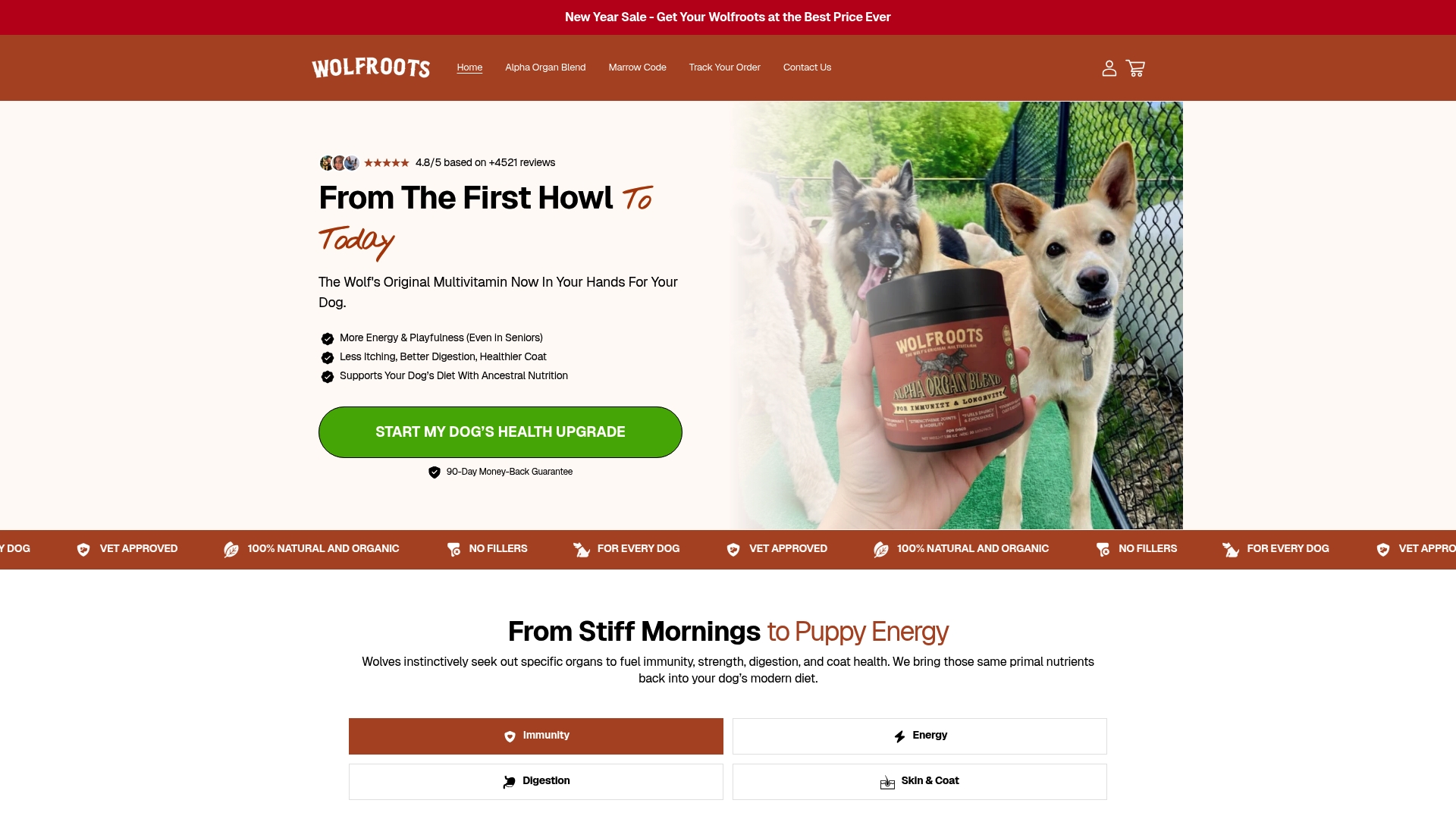
Take the first step to transform your dog’s health today with trusted, vet-approved primal nutrition solutions. Explore our full selection at WolfRoots and learn why pet owners are switching to natural organ-centered supplements for lasting wellness. Your dog’s vital energy and joy are just a click away. Start now at Shop – WolfRoots.
Frequently Asked Questions
What are natural dog vitamins?
Natural dog vitamins are nutrients derived from whole food sources, such as fresh meats, vegetables, and fruits, rather than being created in a laboratory. They offer better absorption and bioavailability for dogs.
How do natural dog vitamins differ from synthetic vitamins?
Natural vitamins come from complex food mixtures that include additional nutrients and cofactors, enhancing their effectiveness. Synthetic vitamins, on the other hand, are isolated compounds created chemically, often lacking these supporting elements.
Why is proper sourcing of natural dog vitamins important?
Proper sourcing ensures that natural dog vitamins retain their potency and effectiveness. High-quality supplements come from whole food sources, while lower-quality options may include by-products or fillers that diminish health benefits.
What specific health benefits do natural dog vitamins provide?
Natural dog vitamins can improve immune function, joint health, cognitive clarity, and coat vitality. They address multiple health aspects holistically, supporting your dog’s overall well-being rather than just managing symptoms.
Recommended
- 7 Essential Vitamins for Dogs Naturally Explained – WolfRoots
- What Is Canine Multivitamin? Key Benefits Explained – WolfRoots
- Why Dogs Need Multivitamins for Optimal Vitality – WolfRoots
- What Is Multivitamin Blend for Dogs? Key Benefits – WolfRoots